
Our Heritage.
For thousands of years, spices have held an important place in India's Ayurvedic traditions, valued not only for their flavour but also for their traditional role in supporting digestion and overall wellbeing. Ayurveda recognised food and spices as an integral part of daily life, with ingredients such as turmeric and black pepper featuring in traditional preparations. Today, modern research continues to explore the bioactive compounds found in these familiar spices and their effects on the human body.
Chapter 01
Meghalaya, India
The Story of Lakadong Turmeric
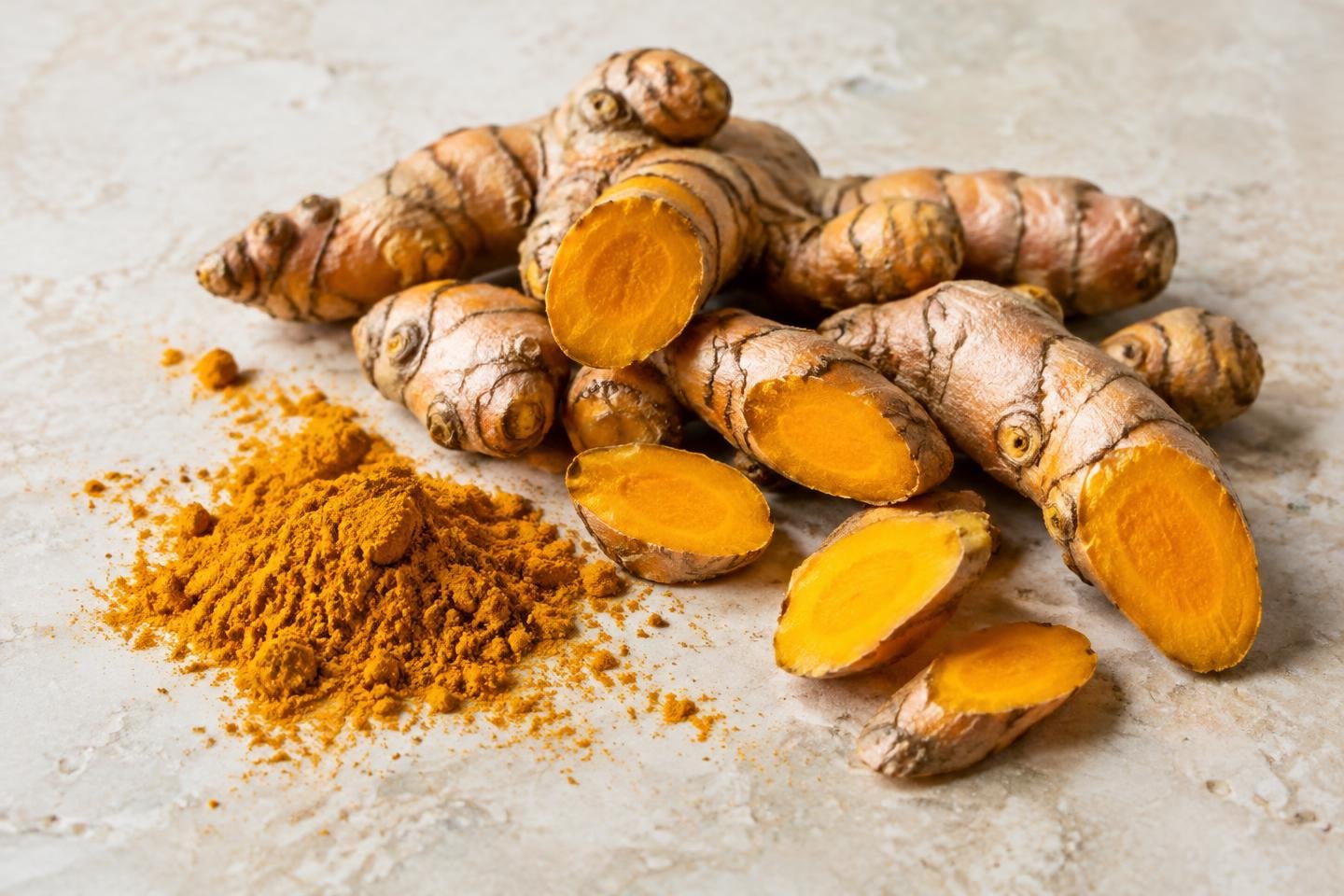
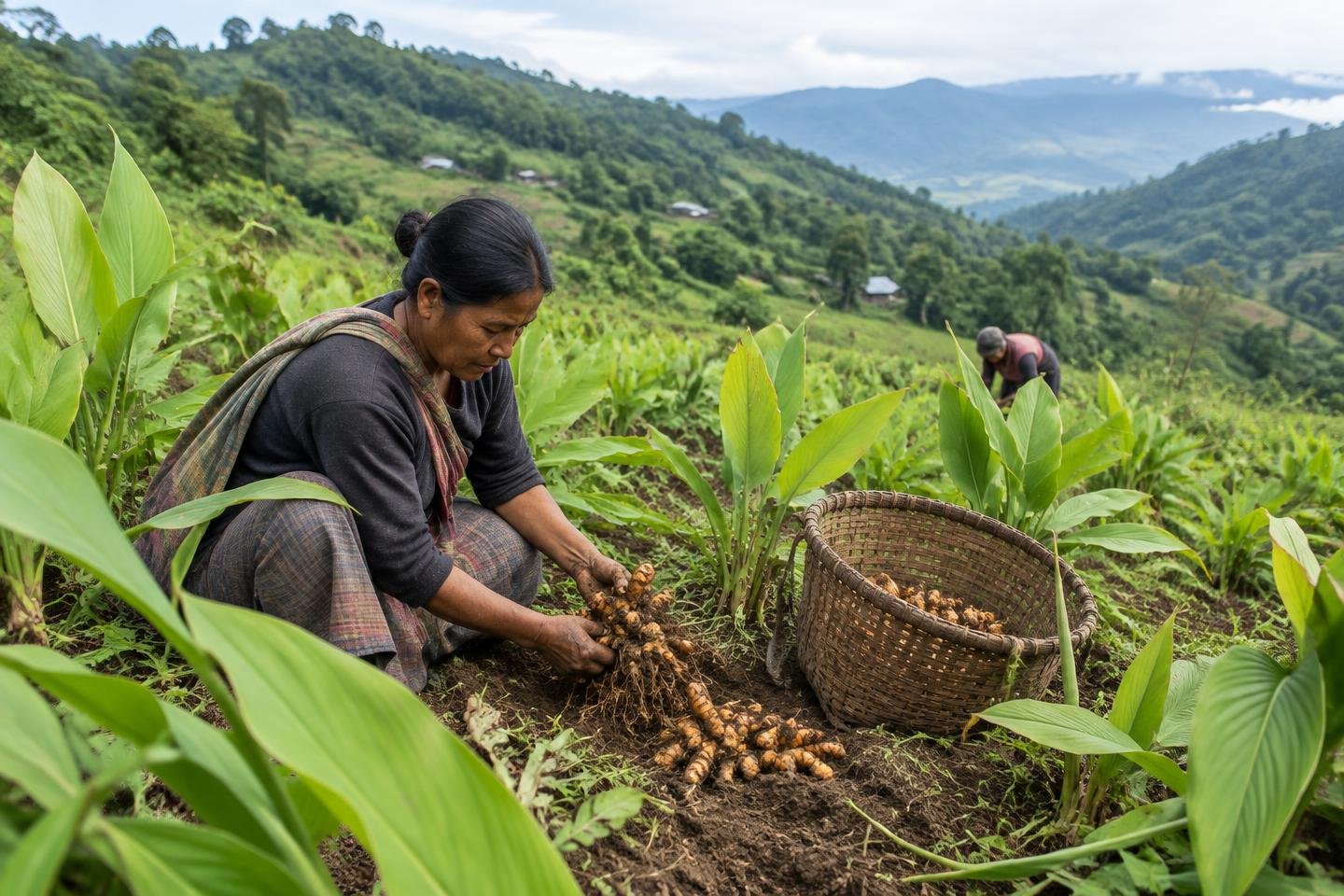
Lakadong turmeric originates in West Jaintia Hills, Meghalaya, where local farming communities have sustained its cultivation through generations of traditional knowledge and agricultural practices. Recognised for its deep golden-orange rhizomes and naturally high curcumin content, Lakadong turmeric is distinctive among commonly available varieties. Its curcumin levels can vary depending on growing conditions, harvesting and processing. Lakadong turmeric has received Geographical Indication (GI) recognition, connecting its identity to its region of origin in the Jaintia Hills of Meghalaya. True ingredient quality goes beyond appearance. Origin, cultivation, harvesting, drying, processing and storage all contribute to the character of the finished ingredient. Documented sourcing and batch-specific testing help establish greater transparency.
Explore the Research
01 · Official agricultural resource
Turmeric — National Horticulture Board
Official agricultural resource covering turmeric cultivation, processing and general agricultural information.
Read Research02 · Agricultural research
Lakadong Turmeric: Package of Practice for Organic Production, Challenges and Opportunities (2025) — ICAR
Research on Lakadong turmeric cultivation, organic production practices, challenges and opportunities.
Read Research03 · Agricultural and phytochemical review
Indigenous Lakadong Turmeric of Meghalaya and Its Future Prospects (2023)
Research discussing Lakadong turmeric's geographical origin, cultivation, phytochemical composition and potential applications.
Read Research04 · Laboratory characterisation
Purification and Characterization of Curcumin, Desmethoxycurcumin, and Bisdemethoxycurcumin from North-East India Lakadong Turmeric (2023)
Scientific research on the identification and characterisation of curcuminoids in Lakadong turmeric.
Read Research
Chapter 02
Malabar Coast, Kerala
The Story of Tellicherry Black Pepper
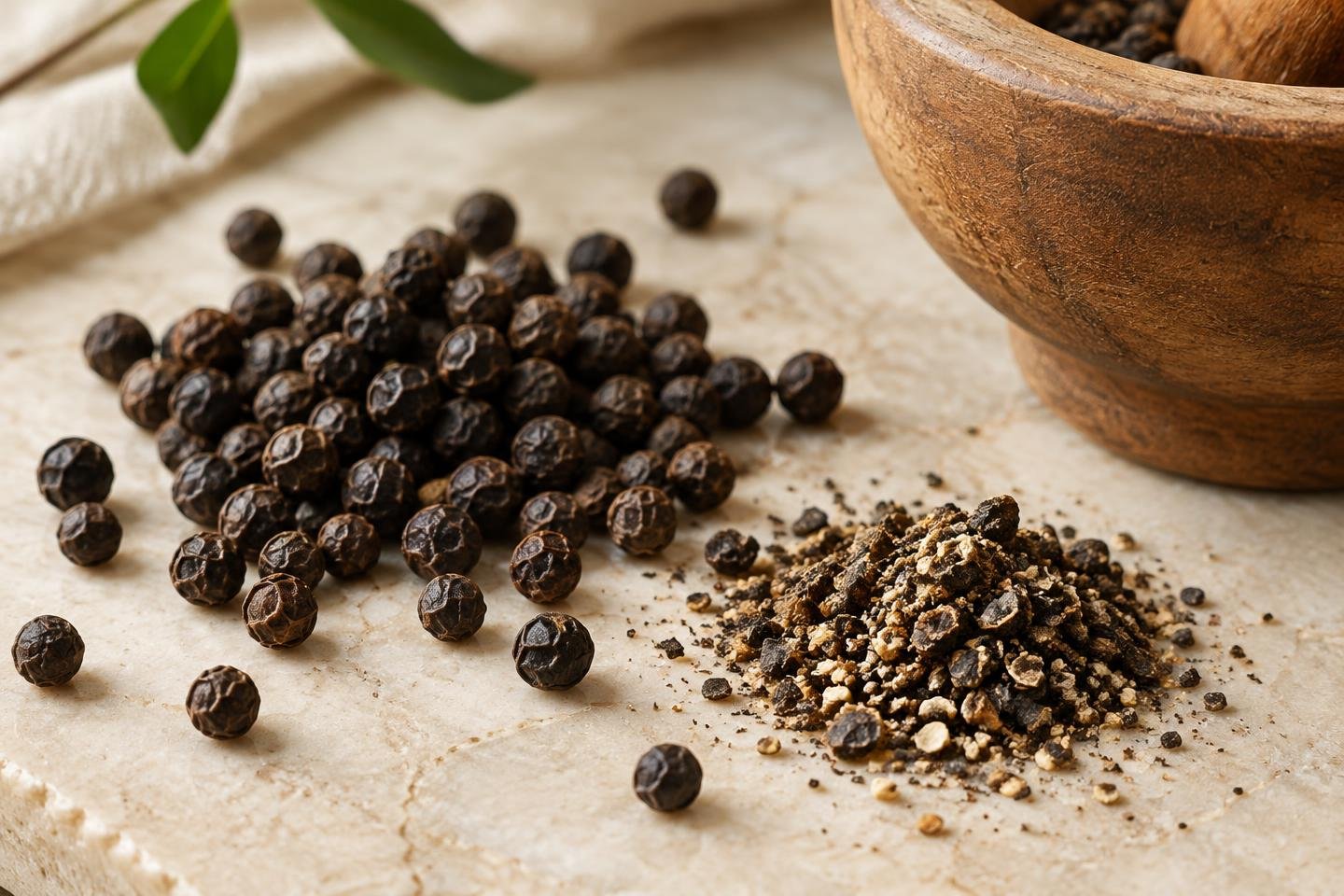
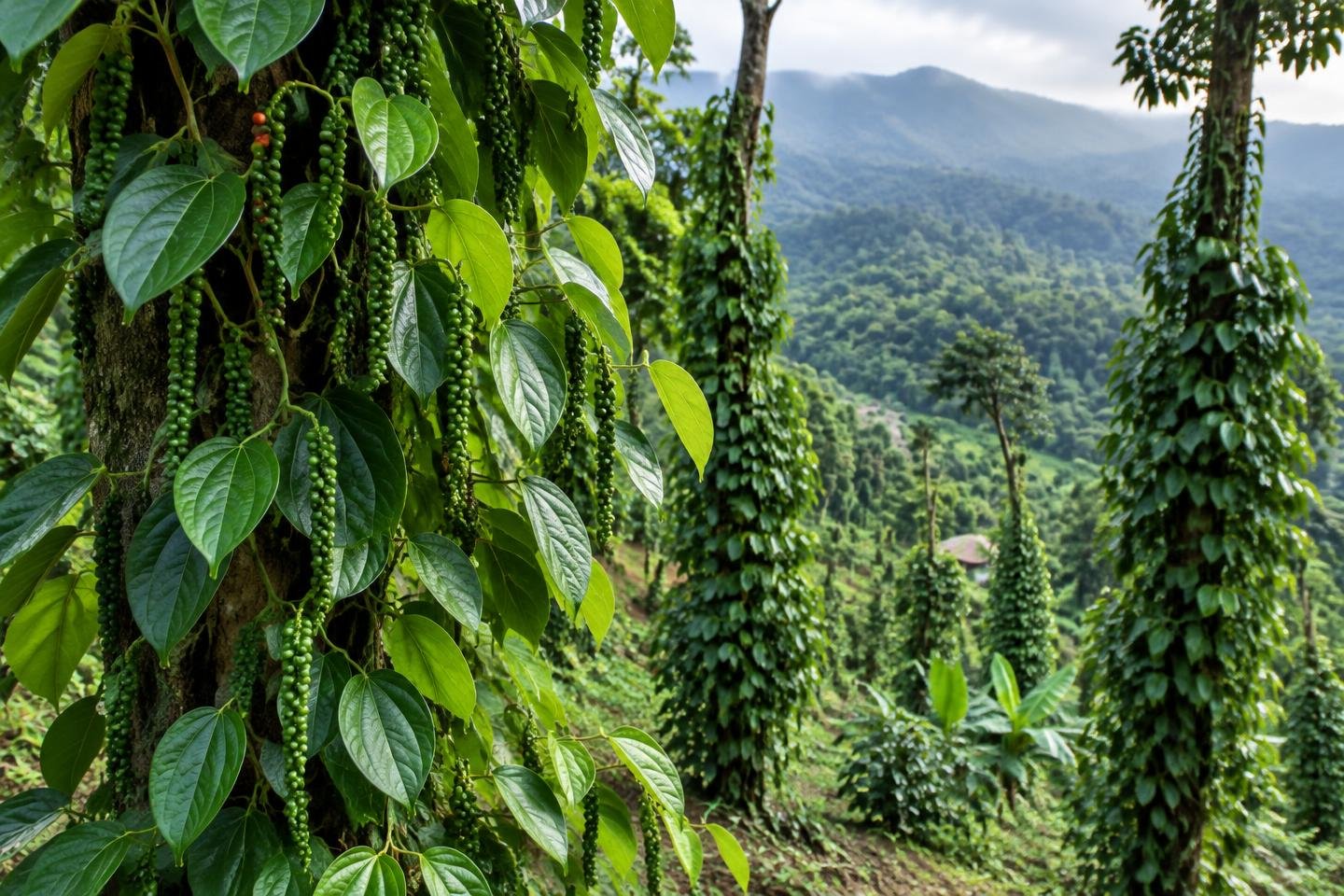
For centuries, the Malabar Coast of Kerala played an important role in the global spice trade. Its pepper-growing communities connected the region with merchants and trade routes across the world. Black pepper naturally contains piperine, which contributes to its pungency, while volatile oils give it its characteristic aroma and flavour. Quality goes beyond size. Origin, berry maturity, drying and storage all influence the character and freshness of black pepper. Kerala's pepper vines and the spice-growing landscapes of the Western Ghats form the backdrop to this heritage. Black pepper naturally contains piperine, which contributes to its pungency, while volatile oils give it its characteristic aroma and flavour.
Explore the Research
01 · Official agricultural resource
Black Pepper — ICAR-Indian Institute of Spices Research (ICAR-IISR)
An official Indian research institute resource covering black pepper, its cultivation, characteristics and agricultural background.
Read Research02 · Commercial educational article · not scientific research
The Secret of the Tellicherry Pepper
Supplementary reading specifically discussing Tellicherry pepper, its characteristics, size and flavour. Clearly distinguish this commercial educational article from scientific research.
Read Research03 · Scientific review
Piper nigrum and Piperine: An Update (2013)
A scientific review covering black pepper, piperine and its biological properties.
Read Research04 · Scientific review
Black Pepper and Health Claims: A Comprehensive Treatise (2013)
Research reviewing black pepper's investigated biological properties, including antioxidant and anti-inflammatory activity.
Read Research
Chapter 03
Curcumin & Piperine
When Turmeric Meets Black Pepper
The Science of a Powerful Combination
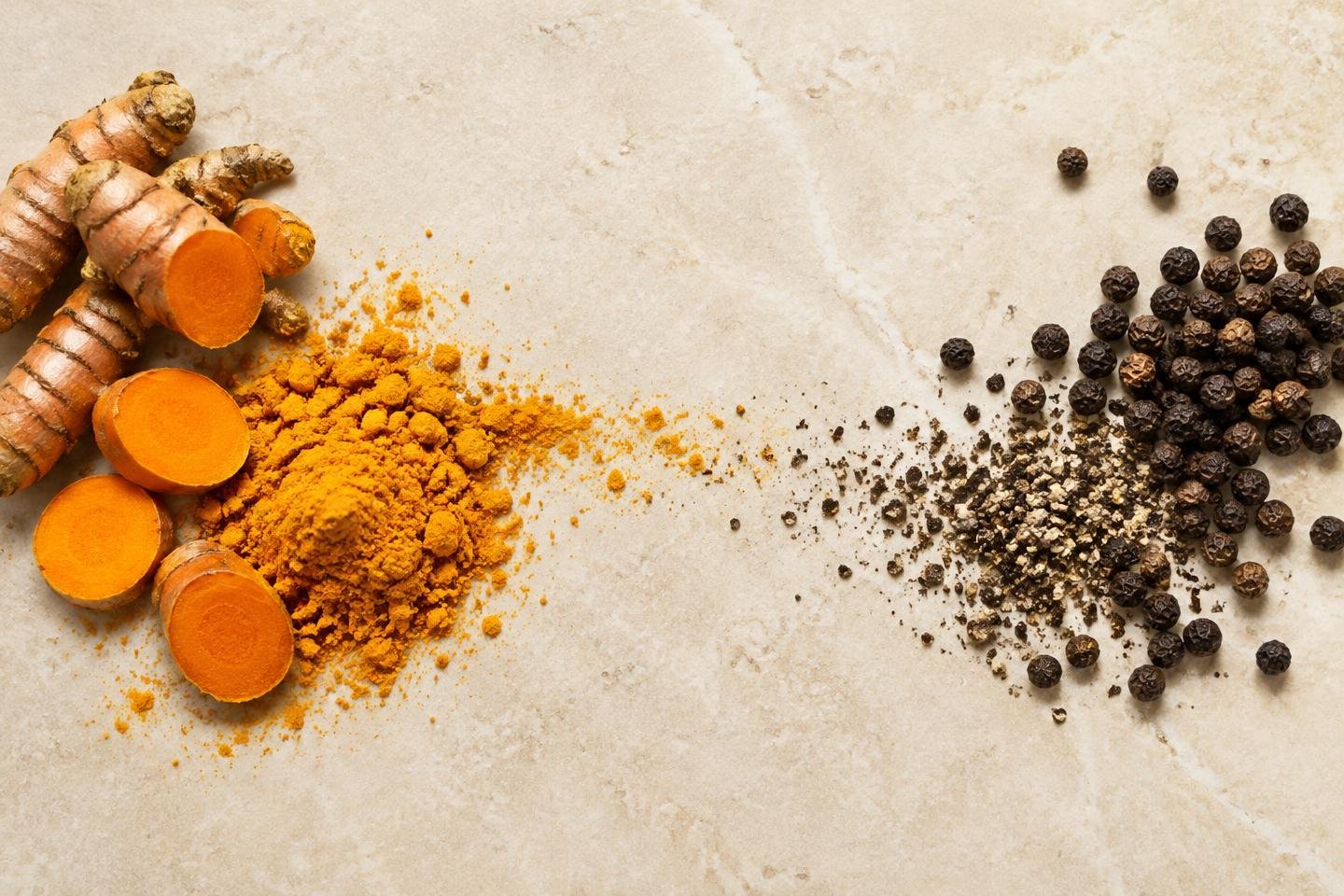
Curcumin, the principal bioactive compound in turmeric, is widely studied for its antioxidant and anti-inflammatory properties. It plays an important role in research exploring oxidative stress, inflammatory pathways and overall cellular health. Black pepper contains piperine, a naturally occurring bioactive compound known for its antioxidant properties. Piperine has also been studied for its ability to influence the absorption and metabolism of certain nutrients and bioactive compounds. When consumed together, curcumin and piperine present an interesting nutritional combination. Research suggests that piperine may enhance the bioavailability of curcumin by influencing how it is absorbed and metabolised in the body. Together, these two traditional ingredients bring complementary bioactive compounds that continue to be explored for their potential role in supporting overall well-being.
Explore the Research
01 · Animal and human pharmacokinetic study
Influence of Piperine on the Pharmacokinetics of Curcumin in Animals and Human Volunteers (1998)
The foundational study investigating how piperine influences curcumin absorption and bioavailability in animals and human volunteers.
Read Research02 · Human randomised controlled clinical trial
Turmeric Plus Black Pepper for the Improvement and Remission of Metabolic Syndrome: A Randomized, Double-Blind, Placebo-Controlled Clinical Trial (2024)
A human clinical trial investigating a turmeric and black pepper formulation and its effects on metabolic health markers.
Read Research03 · Human dietary study
The Effect of Turmeric and Black Pepper Powder Incorporated in Breakfast on Postprandial Glycemia, Appetite, Palatability, and Gastrointestinal Well-being in Normal-weight Adults (2024)
A human study examining culinary turmeric and black pepper consumed with breakfast, including post-meal blood glucose, appetite and gastrointestinal well-being.
Read Research04 · Human randomised cross-over clinical trial
Bioenhancer Assessment of Black Pepper with Turmeric on Self-Reported Pain Ratings in Adults: A Randomized, Cross-Over, Clinical Trial (2026)
A human clinical trial comparing turmeric alone with turmeric combined with black pepper for self-reported pain outcomes. Include the study's findings accurately, including the lack of a statistically significant difference between the treatment groups.
Read Research